Why the empty nest can hit harder than expected

By Bill GasiamisLife coach, It's a Gass
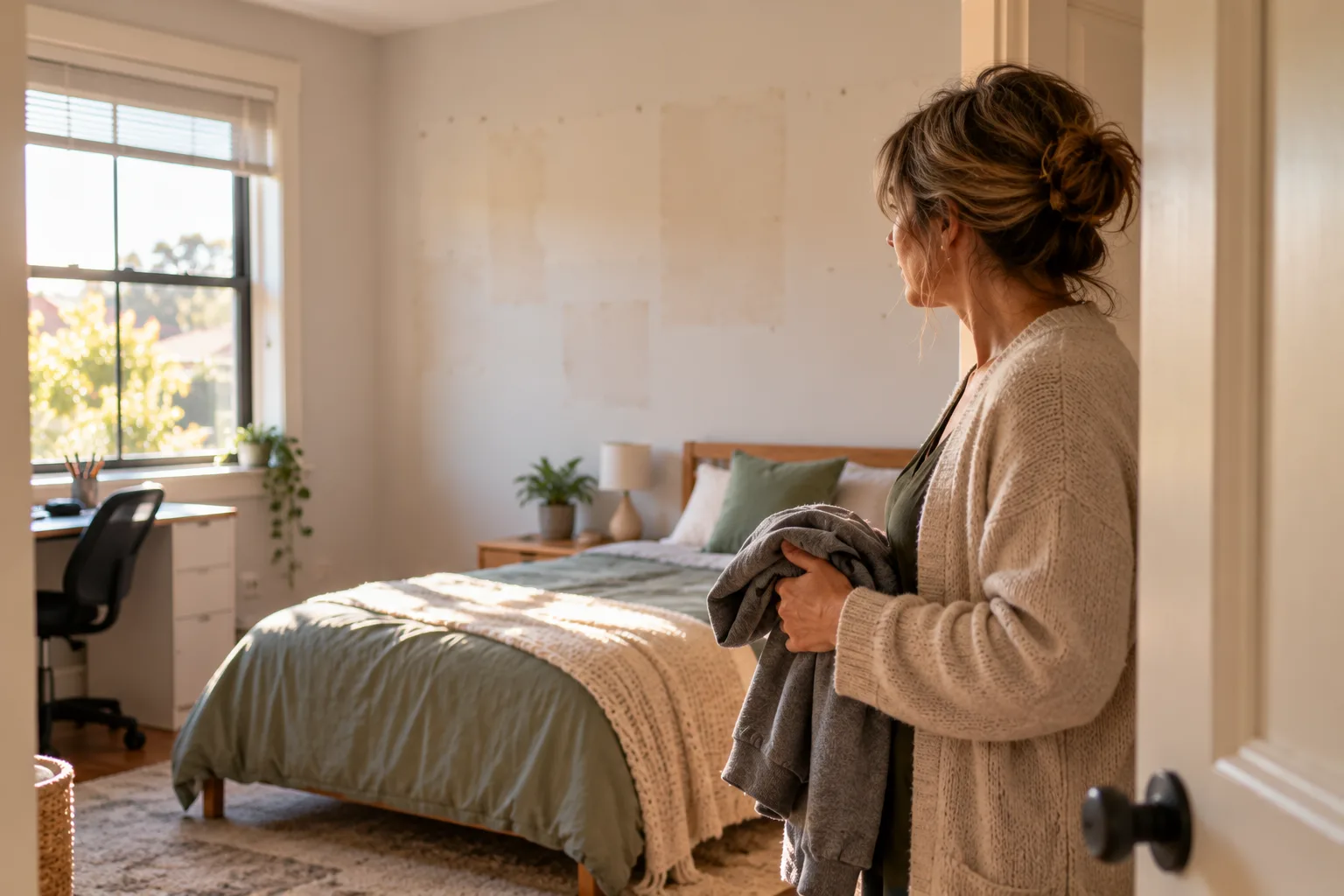
The empty nest is a change of role, not just a change of routine, so it can catch you off guard even when you planned for it. Name what's happening, give it time, rebuild your week and ask what you want this time to be for.
For years you've been told the kids leaving home is something to look forward to. More time, more space, fewer lifts to training. Then it happens, and the house feels strange. You walk past a bedroom that's too tidy. You cook too much for dinner. You might feel proud and lost in the same afternoon. If that's where you are, nothing has gone wrong.
Raising children is one of the biggest jobs most people ever do. It shapes your week, your spending, your friendships and your sense of who you are. When the kids move out, you haven't stopped being a parent, but the daily version of that role has ended. Losing a role that big is a kind of grief, even when everyone is healthy and happy and the move is exactly what should happen.
That's why the empty nest can hit harder than expected. You planned for the logistics. You probably didn't plan for the part of you that was organised around being needed.
People experience it very differently. A 2024 review in Communications Psychology looked at research from Western and Asian countries and described two opposite effects: some parents' wellbeing drops because they've lost a central role, while others do better because the strain of that role has eased. Factors like culture, gender roles and social connection shape which way it goes.
None of these are unusual. Together, they can make a quiet house feel very quiet.
It helps to say out loud what's happening: "I miss them, and I'm not sure what I'm for right now." Saying it to a partner, a friend or yourself makes it something you can work with rather than a vague heaviness in the background.
It also helps to give it time. The feelings don't vanish overnight, and they tend to change as new routines take shape.
Working out what this next stage is for? A free 15-minute call with Bill is a good place to start.
Book a free 15-min callWhen the children lived at home, your week had fixed points you didn't have to think about. Now you get to choose them. Start small. A regular walk with a friend, a weekly class, a standing phone call with your adult child that doesn't depend on something going wrong.
Pick things that give you some contact with other people. A lot of the social life of parenting happened by default, at the school gate or the side of a field. Now it needs a little more intention.
If you're in a relationship, this is a good time for an honest conversation about what each of you wants from the next ten years. You might want very different things: one of you wants to travel, the other wants to renovate; one wants more time together, the other wants more time alone. Neither is wrong. It's much easier to find a plan that works for both of you if you talk about it early, rather than discovering the differences a year in.
Some couples find it useful to plan one new thing together that has nothing to do with the kids. It doesn't need to be big. It just needs to be yours.
For single parents, the change can be even sharper. There's no one else in the house to notice the quiet with you. Building connection outside the home becomes more important, and it's worth being deliberate about it: a club, a volunteer role, a regular catch-up that's in the diary rather than left to chance.
The question most people ask is "How do I fill the time?" A better one is "What do I want this time to be for?" Maybe it's a return to work you put on hold. Maybe it's study, or health, or a creative interest you dropped twenty years ago. Maybe it's simply rest. Try a few things before you decide what sticks.
Feeling flat for a while is normal. If the sadness is constant, you've lost interest in things you used to enjoy, or you're struggling to sleep or get through the day, talk to your GP. Beyond Blue and Medicare Mental Health can also point you to support.
Coaching is a steady place to work out what comes next. We look at where you are right now, where you'd rather be in a year's time and what's getting in the way, whether that's habit, guilt or not knowing where to start. Then you choose one step to take before we next talk.
About Bill Gasiamis. Bill is a Melbourne life coach who works one-on-one, online by video: where you are today, where you'd rather be, and what's stopping you.
Results Coaching · mBraining Australia Master Coach · INLPTA NLP Practitioner